I'm always studying about health, personal development and lifestyle. And I've been increasingly bothered by what I've seen on social media and the internet about this question: what should you do first to really improve your life? There are so many formulas out there... You hear that you have to change your attitudes first, or your mentality, your beliefs - the famous “mindset”, as some people say.
However, follow my reasoning. In the Talmud, one of the holy books of Judaism, it is written: “Pay attention to your thoughts, for they will become your words. Pay attention to your words, for they will become your actions. Pay attention to your actions, because they will become your habits. Pay attention to your habits, because they will become your character. And pay attention to your character, because it will form your destiny”. It's also worth remembering a phrase attributed to Einstein: “Madness is doing the same things and expecting different results.”
According to these pearls of knowledge, what transforms life are habits. They are the ones that are most repeated on a daily basis and therefore determine our results. In order for these habits to change, we need to adopt different attitudes, which are born from our thoughts. These thoughts come from the combination of the knowledge a person acquires throughout their life and what they understand and interpret from this - in other words, their conscience. Everything, then, seems to point to the fact that the first thing we need to do to improve our lives is to change our knowledge and thoughts, to change our mentality.
But what about when someone can't do this because they don't have the energy, disposition, focus or clarity to seek out this knowledge? When you can't study, learn, memorize what you need and, from there, transform your thoughts, start new activities and sustain what needs to be done? What do you do in this situation?
A patient once came to me - something quite common in my office - with good purchasing power, access to information, and listened attentively to everything I said about healthy habits, supplementation, hormones, neurotransmitters, enzymes, macro- and micronutrients. But at the end, he said to me: “Dr. Icarus, I can't put this into practice. I can't organize myself to apply it. I forget things. I have no willpower. When I get home in the evening, I just want to throw myself on the sofa or in bed. I don't even have the motivation to start, let alone to continue.”
This is a recurring case. Many even do one thing or another because they recognize the need, but don't manage to start everything - or even start, but don't keep it up. I see patients like this almost every week. So what do you do? Put them on medication? Refer them to a psychologist? Say it's something spiritual? Treat it as a minor issue, as if all you have to do is “fix it”, roll up your sleeves and get on with it?
That's not the way.
As I explained before, different attitudes come from thoughts. And where are the thoughts? In the mind - that dynamic whole that changes all the time. But where is the mind? In the brain? In the spirit? It's a discussion that has yet to reach a consensus. The fact is that, wherever it is, it can only manifest itself in the world through the body. And it is ultimately the brain that controls this body.
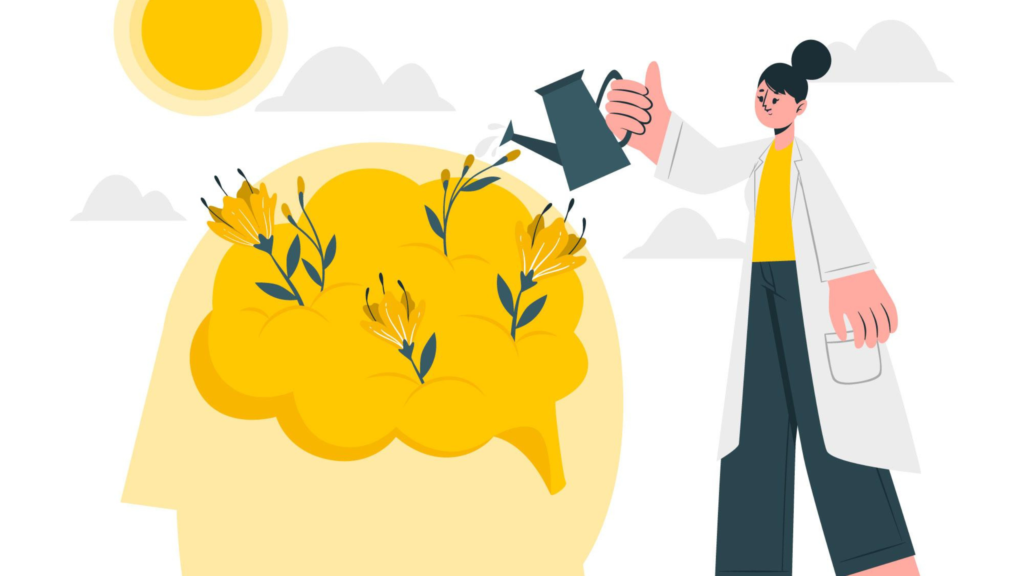
The brain, this 1.3 kg organ, is what bridges the gap between mind and reality. It receives the stimuli captured by the body, sends it to the mind to process and, in return, transforms the decisions into commands. That's why, especially when someone can't change or sustain what's needed, the initial focus needs to be on the brain. How is it? Under what conditions does it work?
What I often see is people looking for methods, gurus, courses and advanced strategies without first solving the basics: the state of their own brain. It's like trying to move forward with a system that doesn't even have a good structure and inputs, with no energy and no foundations.
The brain behaves like a window between the mind and the world. Imagine a window, like the one I have in my office. If I ask you if it's a nice day or an ugly one, you might hesitate to answer. Why? Because the window is dirty. Because the window is dirty - it's always greasy, since the room is above the exhaust turbines of the mall's food court. If the window is dirty, those inside see the world in a distorted way, and those outside also see everything in a blur.
This is how the brain works. It processes what the body picks up, turns it into thoughts and sends it to the mind. The mind reflects based on consciousness and responds with commands that the brain translates into actions. If the brain is ‘dirty’, malfunctioning, perceptions and actions will be distorted because they are based on distorted data/information. Got it?
I remember the case of a doctor I saw. She said she felt sad about her life, even though she had everything: financial stability, beautiful children, a present husband. But she was dissatisfied, thinking of separating, of giving it all up. During the consultation, analyzing her habits and complaints, I realized that her brain wasn't in the best condition to function properly. I told her that we would improve three very important things first, and only then would we take care of the rest. Based on this, she would come back with tests and then we would understand what still made sense to change.
She accepted. A month later, she came back different. She had taken the change in habits seriously - especially the three most important ones - and told me: “I'm happier. I understand my reality better. I see that I used to complain too much about too little. I have more clarity to change what I need to. And I don't want to separate anymore. I love my family, my children. I'm fine.”
No medication. No supplements. Just the basics.
What changed was that she gave her brain the minimum it needed to function. From there, she was able to move forward. So forget this idea of starting with the mindset. Start with the “bodyset” - preparing the body, especially the brain, so that it can sustain any transformation. After all, everything that's good for the brain is good for the body. And the health of the body is what sustains the health of the brain.
So you've understood: your first focus needs to be on providing the minimum conditions for your brain to function well. It is the key to your existence, to everything you think, feel, decide and do. It's no use having all the theory in your head if your brain can't access, process or apply what you've learned.
You've come this far. You've already traveled an important path of knowledge, reflection and practice about lifestyle habits. But it's now that everything needs to be transformed into consistent action. And before looking for any advanced method, modern tool or miracle strategy, you need to make sure the basics are working - for real.
The basis of health, balance, mental clarity, focus and motivation begins with three simple attitudes: hydrating properly, breathing consciously and eating well.
First, water. Drink a glass of water an hour, even if you're not thirsty. Don't wait for your body to complain before you take care of yourself. The brain is 72% water, the blood 92%, the joints more than 80%, and every cell in your body depends on this vital substance to function. Without enough water, nothing flows: digestion fails, nutrients don't circulate well, toxins aren't eliminated, the body doesn't repair itself. Even your thoughts are compromised, because synapses - the connections between neurons - only work properly in a well-hydrated environment.
Then breathing. Take three deep breaths an hour. That's right: just three. Inhale as deeply as you can, hold the air for a few seconds, exhale all the way and repeat. It may not seem like much, but this simple exercise reoxygenates the brain, reduces tension, activates the parasympathetic nervous system and restores focus, presence and clarity. On an average day, under stress, the brain can consume up to half of all the oxygen you breathe in. Now imagine the impact of living for years with short, shallow, inattentive breaths. Change that.
Finally, nutrition. You already know everything you need to know about this. But here's a reminder: the body is an extraordinary machine, and it only delivers its best when given real fuel. More water, protein, good fats, fiber, natural foods. Less gluten, dairy products, excess carbohydrates, ultra-processed foods, unnecessary chemicals. Your brain responds quickly to what you eat. It only takes a few days of proper nutrition to notice the difference in your mind, emotions and behavior.
These three actions - water, breathing and eating - are not optional. They are the basics for you to exist. They are the firm ground on which everything else rests. You can have access to the best books, courses, therapies, professionals and methods, but if you neglect the minimum, you'll end up spending time, energy and money with little - or no - real results.
And of course, these three are just the beginning. Don't forget the other habits that sustain your life beyond existence: those that help you survive with vitality, such as regular exercise, restorative sleep, contact with the sun, emotional, spiritual and social health
Then there are those that optimize your functioning: managing stress, reducing intoxication, using supplements correctly when necessary. Then there are those that propel you forward in life's achievements, such as the support of good professionals, planning, action, discipline and faith in the process. And finally, those that take life to another level - habits that connect you with purpose, presence and fullness, such as ikigai, meditation and daily stretching
That's why the sequence presented throughout this book was no accident. There is a clear and practical logic: first, to ensure that the body can exist. Then, that it functions healthily. Then optimize it. That it grows. And finally, that it flourishes.
You already have the map. All that's left now is to walk.
Now it's up to you.















 Português do Brasil
  English