Reducing carbohydrates in the diet is good for most people, according to what I've seen in my practice in almost 20 years of medicine. To that end, the link below provides some interesting information, but with the following caveats mine The following caveats apply if you decide to adopt the LCHF diet (low carbohydrate, high fat):
1️⃣ Have competent nutritional and medical supervision, both when you are in the transition phase from your current diet to LCHF (as I suggest here, taking into account the caveats below) and regularly afterwards, to monitor and modulate what is necessary.
2️⃣ Only adopt LCHF if it is associated with good lifestyle habits (these: https://icaro.med.br/15habitos/) - after all, they optimize fat metabolism.
3️⃣ NO eat “only when you're hungry” - have meals every 3 to 4 hours (and understand that periods of time longer than 3 hours are only valid for those who have adapted well to LCHF).
4️⃣ Remove milk (and dairy products) and gluten from your diet: they are highly inflammatory (read about it on my website and understand) and fat itself is only harmful in excess or if subjected to inflammatory changes.
5️⃣ Low glycemic index carbohydrates are welcome (and even those with a high glycemic load, but for these, in low quantities at a time), such as sweet potatoes and yams.
6️⃣ If something isn't right, check for food intolerances (foods that aren't good for you, but are being eaten, even among those “allowed” in the diet - read about intolerances here: https://icaro.med.br/alimento-veneno-tratamento/). And remember: foods that are repeated too often can lead to food intolerances or sensitivities.
7️⃣ Make sure you keep a good amount of fiber in your diet on a regular basis, otherwise an excess of fats and proteins will impair the balance of intestinal function and lead to digestive symptoms.
8️⃣ “Paleo” (strict, in the sense that the term is most commonly used) is a type of “Low Carb”, but with an even greater and more expressive reduction in carbohydrates. I don't recommend it for those who are just starting to remove excess carbohydrates from their diet, because many people “can't handle” the change of going radically low-carb in their daily diet in such a short space of time (yes, carbohydrates are addictive to the body and mind...).
Now yes: in the light of what I've said above, read and benefit from the content below, taken from the website Paleodiario.com
Article translated by Hilton Sousa. The original is here.
Do you want to eat real food (as much as you like) and improve your health and weight? It may sound “too good to be true”, but LCHF (low carb, high fat) is a method that has been used for 150 years. Now, modern science backs it up with proof that it works.
There's no need to weigh your food, count calories or resort to bizarre “meal replacements” or medicines. There's just real food and common sense. And all the information given here is 100% free.
Introduction
An LCHF diet means that you eat fewer carbohydrates and a higher proportion of fat. Even more importantly, you minimize your intake of sugars and flours/starches. You can eat other delicious foods until you're full - and still lose weight.
A number of recent, high-quality studies, shows that LCHF makes it easier to lose weight e controlling your blood sugar. And that's just the beginning.
The basics
- Eat: meat, fish, eggs, vegetables that grow above ground and natural fats (such as butter).
- Avoid: sugar and starchy foods (such as bread, pasta, rice and potatoes).
Eat when you're hungry, until you're full. It's as simple as that. You don't need to count calories or weigh your food. And just forget about low-fat industrialized products.
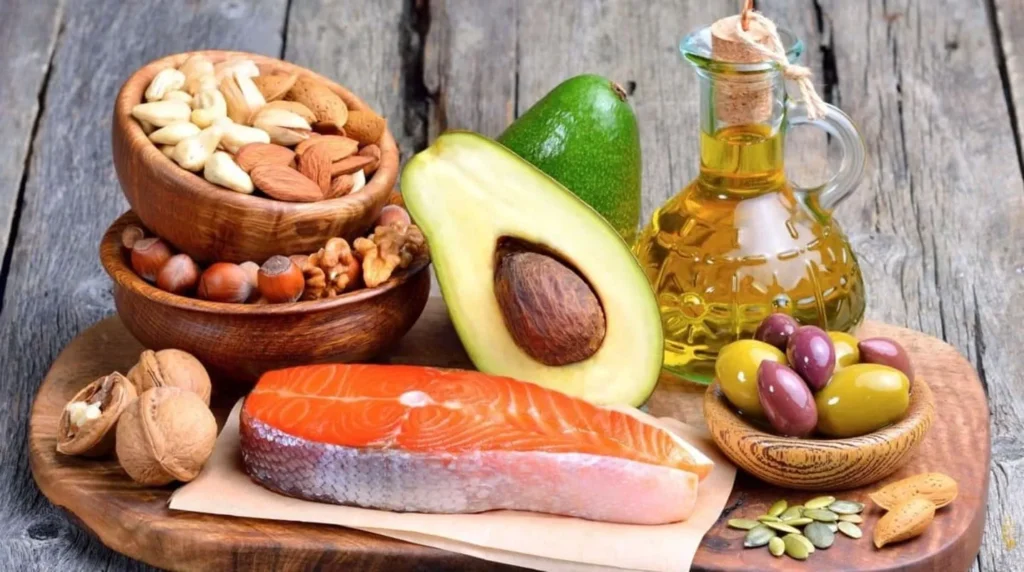
There are solid scientific reasons why LCHF works. When you avoid sugar and starches, your blood sugar stabilizes and insulin levels, the hormone that stores fat, drop. This increases your fat burning and makes you feel fuller.
⚠️⚠️ Note for diabetics ⚠️⚠️
Avoiding carbohydrates that raise your blood sugar will reduce your need for medication to control it. Taking the same dose of insulin used before low carb when you are on the diet can result in hypoglycemia (low blood sugar). You need to test your blood sugar frequently when you are starting the diet and adapt (reduce) your medication. This should ideally be done with the assistance of a doctor.
If you are healthy or a diabetic treated only with diet or only with metformin, there is no risk of hypoglycemia.
Nutritional advice
✅ Eat all you want:
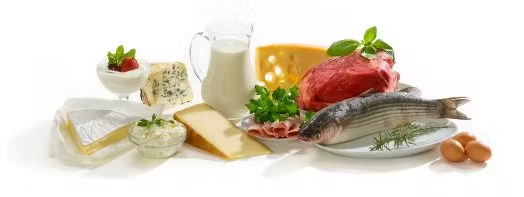
✅ Meat: of any kind, including beef, pork, game meat, chicken etc. Feel free to eat the fat from meats as much as the skin from chicken. If possible, choose “organic” meat.
✅ Fish and crustaceans: of all kinds. Oily fish such as salmon, mackerel or herring are great. Avoid breaded fish.
✅ Eggs: in all forms: boiled, fried, omelettes, etc. Give preference to “organic” eggs.
✅ Natural sauces with a lot of fat: using butter and cream when cooking can make food tastier and increase satiety. Try béarnaise or hollandaise sauce (check the ingredients or make it yourself). Coconut and olive oils are also good options.
✅ Vegetables that grow above ground: cauliflower, broccoli, cabbage, Brussels sprouts, asparagus, Italian zucchini, eggplant, olives, spinach, mushrooms, cucumber, lettuce, avocado, peppers, tomatoes, etc.
✅ Dairy products: always choose whole products, no skimmed ones: butter, cream (40% fat), sour cream, Greek yogurt, yellow cheeses. Be careful with milk and skimmed milk, as both contain a lot of lactose (milk sugar). Avoid flavored, sweetened and fat-free products.
✅ Oilseeds: macadamias, hazelnuts, walnuts, Brazil nuts, cashew nuts, etc. Good for eating in front of the TV (preferably in moderation).
✅ Fruits: strawberry, cherry, pitanga, acerola, blackberry, blueberry. To be eaten in moderation, unless you are on a super-restrictive diet or are allergic. They go well with whipped cream.
Avoid it if you can:
✅ Sugar: the worst of all. Soft drinks, candies, juices, isotonic drinks, chocolates, cakes, breads, confectionery, snacks, ice cream, breakfast cereals. Preferably avoid sweeteners too.
✅ Starch: bread, pasta, rice, potatoes, porridge, muesli and the like. “Wholegrain products” are just less bad. Moderate amounts of roots and tubers may be acceptable (unless you choose to be “extremely low carb”).
✅ Margarine: an industrial imitation of butter, with an artificially high omega-6 fat content. It has no health benefits whatsoever. Statistically, it is linked to asthma, allergies and other inflammatory diseases.
✅ Beer: is liquid bread. Full of quickly absorbed carbohydrates, unfortunately.
✅ Fruits: too sweet, which means too much sugar. Eat them once in a while. Treat fruit as a form of “natural candy”.
From time to time:
You decide when the time is right. Your weight loss may be slowed down a little.
✅ Alcohol: dry wine (white or red), whisky, cognac, vodka and sugar-free cocktails.
✅ Dark chocolate: above 70% of cocoa, preferably in small quantities.
✅ Always drink: water, coffee (try with cream) and tea.
The theory behind LCHF
What were you designed to eat?
Humans evolved for millions of years as hunter-gatherers, without eating large quantities of carbohydrates. We ate the food available in nature by hunting, fishing and gathering all the edible items we could find. These foods did not include pure starch in the form of bread, pasta, rice or potatoes. We've been eating these foods for 5 or 10 thousand years, since the development of agriculture. Only a limited adaptation of our genes happens in such a relatively short time.
With the Industrial Revolution, 100-200 years ago, we built factories that could produce large quantities of sugar and white flour. Pure carbohydrates, quickly digested. We barely had time to genetically adapt to such processed foods.
In the 1980s, the fear of fat gripped the Western world. Low-fat products appeared everywhere. But if you eat less fat, you have to eat more carbohydrates to feel full. And it was at this point in history that our disastrous epidemics of obesity and diabetes began. As the country most terrified of fat in the world, the USA was hit hardest and is now the most obese country on the planet.
Today, it's clear that the fear of real food, with natural fat levels, was a big mistake.
The problem with sugar and starch
All digestible carbohydrates are broken down into simple sugars in the intestines. The sugar is then absorbed into the blood, raising the level of glucose in the blood. This increases the production of insulin, our fat-storing hormone.
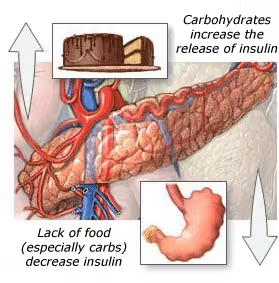
Lack of food (especially carbohydrates) lowers insulin
Insulin is produced in the pancreas (illustrated on the right). In large quantities, insulin prevents fat burning and stores excess nutrients in fat cells. After a while (a few hours or less), this can result in a lack of nutrients in the blood, creating a feeling of hunger and an uncontrollable desire for something sweet. Usually, at this point, people eat again. This starts the process all over again: a vicious cycle that leads to weight gain.
On the other hand, a low carbohydrate intake provides a lower and more stable level of glucose in the blood and lower amounts of insulin. This increases the release of fat from its stores and increases its burning - generally leading to fat loss, especially in the abdominal region in obese individuals.
Weight loss without hunger
An LCHF diet makes it easier for the body to use its fat reserves, as their release is no longer blocked by insulin levels. This may be one reason why eating fat gives a longer-lasting feeling of satiety than carbohydrates. This fact has already been demonstrated in some studies: when people eat everything they want on a low carb diet, the amount of calories ingested typically decreases.
So counting or weighing food is unnecessary. You can forget about calories and rely on your sensations of hunger and satiety. Most people don't need to count or weigh their food any more than they need to count their exhalations and inhalations. If you don't believe me, try it for a few weeks and see for yourself.
Health as a bonus
No animal in the wild needs the assistance of nutrition experts or calorie charts to eat. And yet, as long as they eat the food they evolved to eat, they remain at a normal weight and avoid tooth decay, diabetes and heart disease. Why would humans be the exception? Why would you be the exception?
In scientific studies, not only weight improves on a low carb diet - blood pressure, blood glucose and cholesterol indicators (HDL, triglycerides) also show improvement. A calm stomach and fewer cravings for sweet foods are also common experiences.
Initial side effects
If you stop eating sugar and starches abruptly (which is recommended), you may experience some side effects while your body adapts. For most people, the effects tend to be mild and only last a few days. There are also ways to minimize them.
Common during the first week:
- Headache
- Fatigue
- Dizziness
- Palpitations
- Irritability
The side effects quickly disappear as your body adapts and your fat burning increases. They can be minimized by drinking more fluids and temporarily increasing your salt intake. A good option is to drink a glass of broth every few hours. Or drink a few extra glasses of water and add more salt to your food.
The reason for this is that carbohydrate-rich foods increase water retention in your body. When you stop eating carbohydrate-rich foods, you will lose excess water through your kidneys. This can result in dehydration and a lack of salt during the first week, before your body adapts.
Some people prefer to decrease their carbohydrate intake slowly, over a few weeks, to minimize the effects. But the “Nike way” (“Just do it”) is probably the best choice for most people. Removing most of the sugar and starch usually results in losing a few pounds on the scale within a few days. Most of it may be liquids, but it's good for motivation.
How little (carbohydrate) to eat?
The fewer carbohydrates you consume, the more pronounced the effect on your weight and blood sugar will be. I recommend following the nutritional guidelines as faithfully as you can. When you are satisfied with your weight and health, you can gradually try to eat more liberally (if you want to).
The food revolution
More theory and practice
Here, four of the world's leading experts on the subject explain the theory and practice of carbohydrate restriction:
Tips and recipes
Breakfast suggestions
✅ Eggs with bacon
✅ Omelette
✅ Leftovers from dinner the night before
✅ Coffee with cream
✅ Canned tuna with boiled eggs
✅ Hard-boiled eggs with mayonnaise or butter
✅ Avocado, salmon and sour cream
✅ Sandwich on flourless bread
A very thin piece of hard bread with lots of butter, cheese, ham, etc.
✅ Cheese with butter
✅ Hard-boiled eggs mashed with butter, chopped spring onions, salt and pepper
✅ A piece of brie cheese with ham or salami
✅ Whole milk yogurt with nuts and seeds (and maybe berries)
Lunch and dinner
Dishes with meat, fish or chicken, accompanied by vegetables and a high-fat sauce. There are many alternatives to mashed potatoes, such as mashed cauliflower.
✅ Stews, soups or casseroles with low carb ingredients.
You can use most of the recipes in books if you avoid the ingredients that are high in carbohydrates. It's a good idea to add fat (butter, cream) to the recipe.
Drink water with your meal or (occasionally) a glass of wine.
Snacks
When you eat a low-carb diet with more fat and a little more protein, you probably won't need to eat as often. Don't be surprised if you don't need to snack anymore. Many people do well with 2 or 3 meals a day.
If you need snacks:
✅ Slices of cheese and ham wrapped around a vegetable (some people eat cheese with butter)
✅ Olives
Oilseeds (macadamias, walnuts, hazelnuts, cashews, etc.)
✅ A piece of cheese
✅ One hard-boiled egg, stored in the fridge
✅ Canned tuna
Dining out or meals with friends
✅ Restaurants are generally not a big problem. You can ask to replace the potatoes with salad. For meat dishes, ask for extra butter.
✅ Fast food: kebab can be a decent option (preferably avoid the bread). In hamburger chains, hamburger steaks are usually the least worst option. Avoid soft drinks and French fries, obviously. Drink water instead. Pizza toppings are generally ok and the stricter you are, the less dough you'll eat.
If you eat strictly on a daily basis, it won't be a problem to make a few exceptions when you're invited out to eat. If you're not sure what will be served, you can eat something at home before going out.
Oilseeds and cheeses are good “emergency foods” for when there are no other suitable options available.
Shopping list for beginners
Print out this list and take it to the bakery, supermarket or greengrocer:
- Butter
- Sour cream (40% fat)
- Sour cream (34% fat)
- Eggs
- Bacon
- Meat (ground, steaks, cubes, fillets, etc.)
- Fish (preferably oily fish such as salmon and mackerel)
- Cheese (preferably high-fat)
- Greek yogurt (10% fat)
- Cabbage, cauliflower, broccoli, Brussels sprouts
- Other plants growing above ground
- Frozen vegetables
- Avocados
- Olives
- Olive oil
- Oilseeds
Clean out your pantry!
Want to maximize your chances of success? Especially if you struggle with urges and sugar addiction, it's wise to throw out (or donate) sugary, starchy foods, “light” products, etc.
Included:
- Bullets
- “Chips”
- Soft drinks and juices
- Margarines
- Sugar in all its forms
- Bread
- Pasta
- Rice
- Potatoes
- Breakfast cereals
- Anything that says “low fat” or “fat free”
- Ice cream
- Cookies
Why not do it now?
The snake in paradise
Be very skeptical of “low carb” products such as pasta or chocolate. Unfortunately, these products are generally garbage. They have hindered many people's weight loss and, as a rule, are full of carbohydrates when you can see past the creative marketing.
For example, Dreamfields“ ”low-carb noodles" are practically pure starch and are absorbed in more or less the same way as any other noodle:
What about low-carb bread? Be careful: if it contains grains, it's certainly not low carb. But some companies still try to sell it as a low carb option. Here's an example:
🔗 Fake low-carb bread from Julian Bakery
Low-carbohydrate chocolate is usually full of polyols (“alcohol sugars”: xylitol, maltitol etc.), which the manufacturer does not count as carbohydrates. But roughly half of these carbohydrates can be absorbed, increasing blood glucose and insulin. The rest end up in the large intestine, potentially causing gas and diarrhea. In addition, any sweeteners can keep urges to eat sugar alive.
If you want to be healthy and slim, eat real food instead.
Recipes
Easy ways to prepare eggs:
- Put the eggs in cold water and bring to the boil. Leave for 4 minutes for soft eggs or 8 minutes for hard eggs. Eat them with mayonnaise (but read the ingredients first to make sure it's good) if you like.
- Fry the eggs in butter on one or both sides. Season with salt and pepper.
- Melt butter in a frying pan and add 2 eggs and 2-3 tablespoons of cream. Add salt and pepper. Stir until done. Put spring onions and grated cheese on top. Serve with fried bacon.
- Make an omelette with 3 eggs and 3 tablespoons of cream. Add salt and seasoning. Melt butter in a frying pan and pour in the mixture. When the omelette has solidified, you can top it with tasty ingredients, for example: one or several types of cheese, bacon and fried mushrooms, good sausages (read the ingredients!) or even leftovers from the previous night's dinner. Fold the omelette in half and serve with a salad.
Instead of bread
Will it be difficult for you to give up bread? Ooopsies are a good option. It's a carbohydrate-free “bread” that can be eaten in a variety of ways.
Oopsies
(yields 6 to 8, depending on size)
- 3 eggs
- 100 g cream cheese
- Pinch of salt
- ½ teaspoon psyllium or chia husks (optional)
- ½ teaspoon baking powder (optional)
1️⃣ Separate the egg whites from the yolks.
2️⃣ Beat the egg whites with salt until they reach the point of snow. You should be able to turn the bowl upside down without the egg whites moving.
3️⃣ Mix the egg yolks and cream cheese well. If you like, add psyllium, chia or yeast (this makes the oopsie look more like bread).
4️⃣ Gently mix the egg whites with the mixture of yolks and cream cheese - try to keep the air in the whites.
5️⃣ Place 6 large or 8 small portions on a baking sheet.
6️⃣ Bake in the middle of the oven at 150 °C for about 25 minutes, until they are golden brown.
You can eat oopsies as bread or use them to make sandwiches. You can also add different types of seeds before baking them - for example: poppy, sesame or sunflower. A large oopsie can be used to make a Swiss roll: add a generous layer of whipped cream and some berries. Enjoy!
Less strict: some bread. Can't live without real bread? Then eat a thin slice of bread with plenty of butter and toppings. The more butter and toppings, the less bread you'll need to feel full.
Instead of potatoes, rice, pasta
- Cauliflower puree: chop the cauliflower into small pieces and cook with a pinch of salt until tender. Remove the water, add cream and butter and mash.
- Salads made from vegetables that grow above ground: perhaps with some kind of cheese. Try different combinations.
- Cooked broccoli, cauliflower or Brussels sprouts.
- Vegetables au gratin: fry them in butter, add salt and pepper. Place in a baking dish and add grated cheese. Heat to 225 °C until the cheese is melted and golden.
- Vegetables cooked with cream: for example, cabbage or spinach.
- “Cauliflower rice: grate the cauliflower and boil for 1 or 2 minutes. It's a great substitute for rice.
- Avocado.
Snacks and desserts
- Various oilseeds: macadamias, Brazil nuts, hazelnuts, walnuts, etc.
- Sausages: cut into pieces and secure a piece of cheese with a toothpick.
- Vegetables with sauce: try cucumber sticks, peppers (green, red and yellow), cauliflower, etc.
- Cream cheese rolls: roll cream cheese in thin slices of salami, ham or long strips of cucumber.
- Olives.
- Chips LCHF: on a baking sheet, form small mounds of grated parmesan. Heat in the oven at 225 °C until melted and beautifully colored (be careful - they burn easily). Serve as chips, perhaps with some sauce.














 Português do Brasil
  English